
Work Authorization in the U.S.: What Job Applicants Should Verify Before Applying
Understand the difference between employer requirements, Form I-9 and immigration questions without relying on job-site myths.
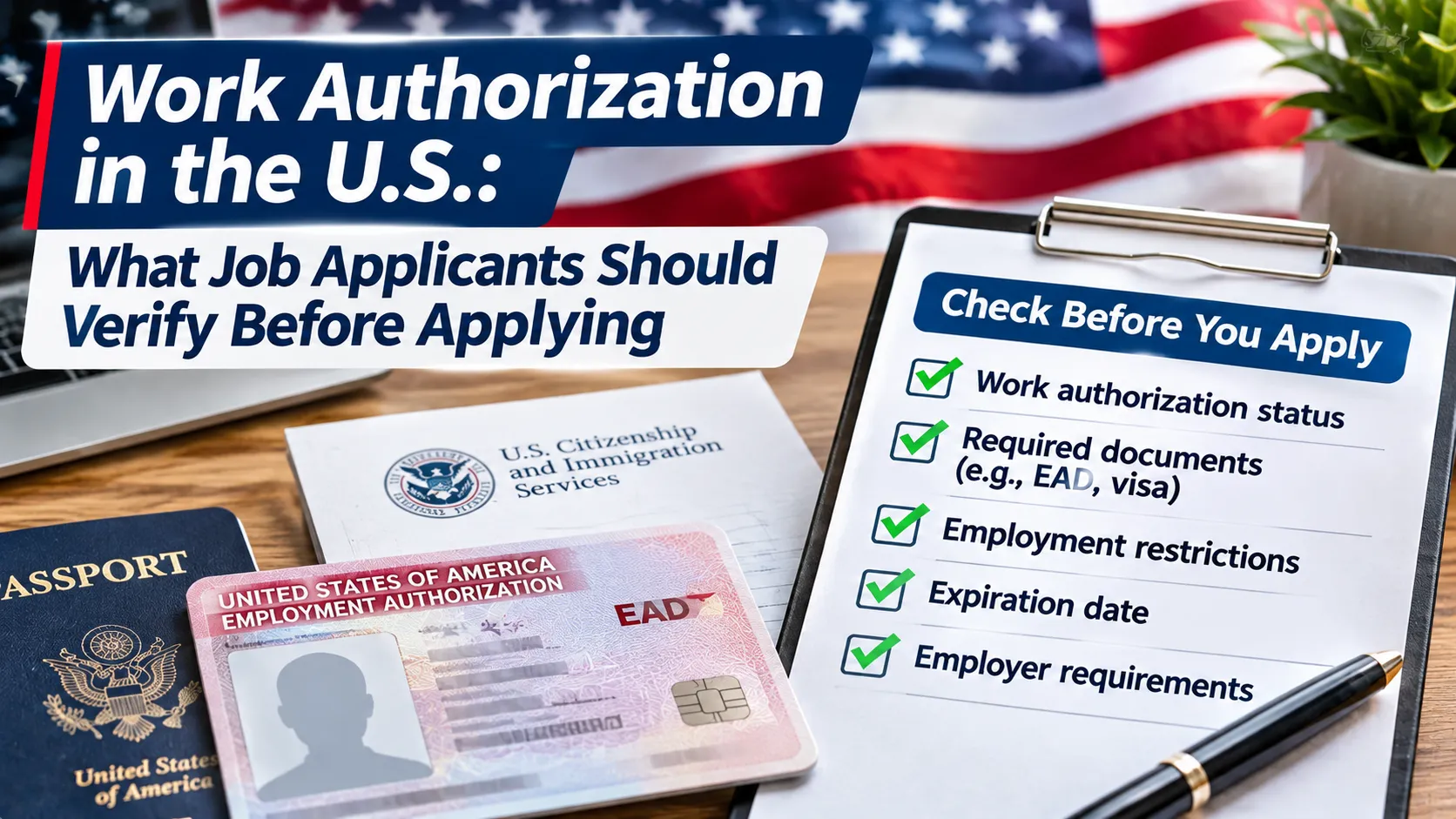
A job application often asks whether you are legally authorized to work in the United States and whether you will need employer sponsorship. These are important questions with legal consequences. Answer them accurately based on your own immigration or citizenship status, not on advice in a comment section.
What an employer is asking
Employers must verify identity and employment authorization for employees hired in the U.S. through Form I-9 rules. Employers may ask applicants about current work authorization and future sponsorship needs when legally appropriate. Each vacancy can also have role-specific eligibility conditions.
Three things that are not interchangeable
- A job offer: a company’s decision to hire someone, subject to its conditions.
- Work authorization: legal permission to work, which depends on a person’s actual status or documentation.
- Visa sponsorship: an immigration process not provided for every job or by every employer.
Having a resume or receiving an interview invitation does not by itself grant the right to work in the United States. A company may not be willing or able to sponsor a particular role.
What to check in a job posting
- Read any question about current U.S. work authorization carefully.
- Check whether the employer explicitly states a sponsorship policy for that position.
- Confirm if the role has citizenship, licensing or security-clearance requirements.
- Use official government guidance for I-9 and immigration document questions.
- For questions about your personal status, consult a qualified immigration attorney or accredited legal representative.
Official sources matter here
For I-9 employment eligibility verification, use USCIS Form I-9 information ↗. For immigration and employment authorization resources, see USCIS Working in the United States ↗. These government resources are more appropriate than guessing based on a company name.
What if an employer asks you to pay for a job?
Regardless of immigration status, suspicious messages offering guaranteed jobs in return for recruitment fees should be treated cautiously. Read our scam-prevention guide. Employer application fees and unauthorized promises can signal fraud.
A practical, honest next step
Identify a role that matches your qualifications, confirm its location and read the entire eligibility section. If it requires something you do not currently have, don’t provide a false answer. Choose a different role or get professional guidance about legitimate routes.